Road safety equipment plays an important role in protecting drivers, pedestrians and infrastructure across Pakistan. From busy urban intersections to motorways and construction zones, different safety systems help guide traffic, improve visibility, manage vehicle speeds and reduce exposure to hazards.
Understanding the different types of road safety equipment is essential for highway contractors, developers, housing societies, industrial facilities and organisations responsible for road maintenance.
This guide explains the main types of road safety equipment used in Pakistan, their applications and the factors to consider when choosing suitable products for a project.
Why Road Safety Equipment Matters in Pakistan
Pakistan has a wide variety of road environments, including national highways, motorways, city roads, industrial access routes, residential streets and mountain roads. Each environment presents different safety and traffic management requirements.
Road safety equipment helps road users recognise potential hazards and understand how to navigate different traffic situations. Well designed systems also support safer movement around construction activities, intersections and road boundaries.
However, no single product can address every road safety challenge. Effective road safety planning requires the appropriate combination of signage, visibility systems, protective barriers and traffic control measures.
1. Traffic Signs and Road Sign Boards
Traffic signs communicate important instructions and information to drivers. They are among the most widely used road safety products in Pakistan.
Common Types of Traffic Signs
- Regulatory signs: Communicate traffic rules such as speed limits, stopping requirements and prohibited movements.
- Warning signs: Alert drivers to upcoming curves, junctions, pedestrian crossings and other hazards.
- Directional signs: Provide information about destinations, routes, exits and road connections.
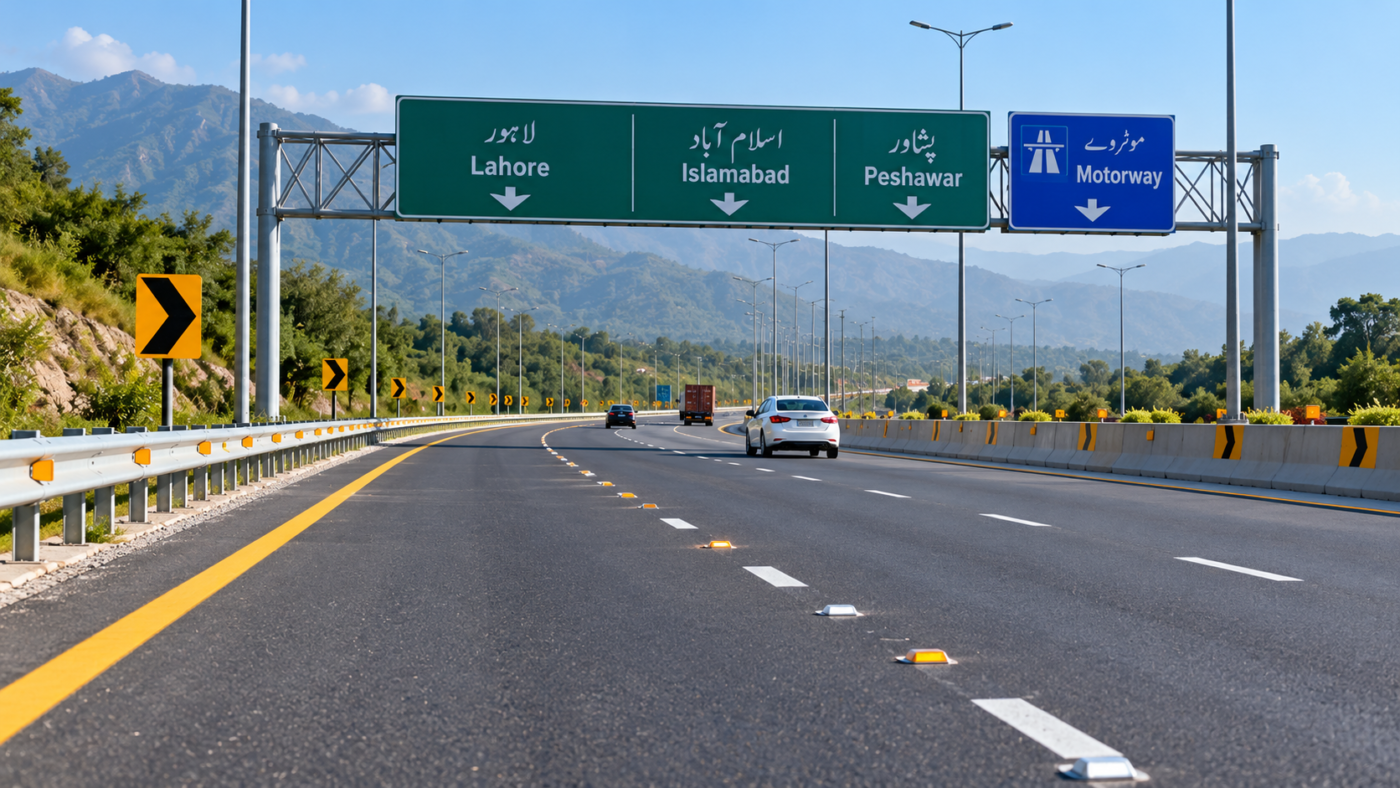
- Gantry sign boards: Large overhead signs commonly used on motorways and major road corridors.
- Construction signs: Warn drivers about temporary changes in road conditions and traffic movement.
Sign visibility, positioning, reflective materials and legibility are important considerations. Road signs should follow the applicable project specifications and requirements of the relevant road authority.
Explore the GSS road safety product range for traffic signage and related products.
2. Traffic Signals and Warning Systems
Traffic signals help manage vehicle and pedestrian movement at intersections and other controlled locations. They are particularly important where traffic volumes, crossing movements or site conditions require organised control.
Examples of Traffic Signal Equipment
- LED traffic signal lights
- Traffic signal countdown timers
- Traffic signal controllers
- Toll station signal lights
- Flashing traffic warning signals
- Radar speed display signs
LED traffic signals provide clear visual indications to road users, while controllers manage the sequence and timing of signal operations. Warning signals may also be used to draw attention to hazards or changing traffic conditions.
The appropriate system depends on traffic engineering requirements, visibility, electrical infrastructure and the operating environment.
Learn more about traffic signals and speed management solutions offered by Gift Safety Services.
3. Road Studs, Cat Eyes and Reflectors
Road studs and reflectors improve road guidance, particularly during darkness or reduced visibility. They help drivers identify lane boundaries, road edges and changes in road alignment.
Plastic Cat Eyes
Plastic cat eyes are retroreflective pavement markers that reflect vehicle headlights back towards approaching drivers. They are used for lane delineation and other road guidance applications.
Aluminum Road Studs
Aluminum road studs provide a durable alternative for suitable high traffic environments. Product selection should consider vehicle loading, pavement conditions and the required reflective performance.
Solar Road Studs
Solar road studs contain light emitting elements powered by an integrated solar charging system. Unlike conventional reflective studs, they can provide active illumination during darkness.
Roadside Reflectors and Delineators
Guardrail reflectors, wall reflectors and delineator posts can provide additional visual guidance along road boundaries, curves and roadside structures.
For more information, visit our road studs, reflectors and delineators service page.
4. Road Safety Barriers and Guardrails
Road safety barriers are designed to help manage the consequences of vehicles leaving their intended path. Depending on their design and installation, barriers may help contain or redirect vehicles and protect roadside areas.
W Beam Guardrails
W beam guardrails are commonly installed along highways, road edges and selected hazardous locations. They require suitable posts, connections, terminals and transitions to function as an engineered safety system.
Cable Barrier Systems
Cable barriers use tensioned steel cables supported by posts. They may be used on selected road medians or roadside locations where the system is appropriate for the site conditions.
Roller Barrier Systems
Roller barriers use rotating elements incorporated into a roadside barrier system. Their suitability depends on the tested system design and specific road conditions.
Plastic Safety Barriers
Plastic barriers are often used for temporary traffic guidance, work zone separation and controlled access arrangements. Not every plastic barrier is crash rated, so it is important to distinguish channelising devices from vehicle containment systems.
Important: Permanent roadside barriers must be selected and installed according to applicable engineering requirements. Their safety performance depends on the complete system, not simply the appearance of an individual component.
Discover our safety barriers and guardrail solutions for road infrastructure projects.
5. Speed Breakers and Traffic Calming Equipment
Traffic calming equipment is used in locations where vehicle speeds need to be managed. Common applications include housing societies, parking facilities, schools, industrial premises and selected internal access roads.
Common Speed Management Products
- Rubber speed bumps: Modular raised devices used in suitable low speed environments.
- Plastic speed breakers: Visible modular speed control products for selected road and parking applications.
- Aluminum speed breakers: Heavy duty products for suitable commercial or industrial settings.
- Rumble strips: Surface features that create audible and tactile feedback to alert drivers.
- Radar speed signs: Electronic displays that show approaching vehicle speeds.
Speed breakers should not be installed indiscriminately on high speed roads. Their use must be appropriate for the road classification, design speed, emergency access and local authority requirements.
6. Traffic Cones and Construction Zone Safety Equipment
Road construction and maintenance activities can create temporary hazards. Work zone safety equipment helps communicate changes in traffic conditions and guide vehicles around affected areas.
Typical Work Zone Products
- Traffic safety cones
- Plastic message cones
- Portable warning signs
- Temporary safety barriers
- Flashing warning lights
- Delineator posts
- Barricade tapes for suitable pedestrian areas
- High visibility safety vests
Temporary traffic management should be planned according to the road layout, traffic speed, working area and applicable safety requirements. Traffic cones alone are not a substitute for a properly designed work zone.
7. Anti Glare Boards and Highway Fencing
Certain road safety products address specific infrastructure challenges beyond basic traffic control.
Anti Glare Boards
Anti glare boards are installed on suitable divided road medians to help reduce direct headlight glare from opposing traffic. They can be particularly useful where road geometry and lighting conditions create visibility challenges.
Chain Link Fencing
Highway fencing helps define boundaries and discourage unauthorised access by people or animals. The appropriate fencing design depends on the location, site conditions and project requirements.
How to Choose Road Safety Equipment for a Project
Selecting the correct equipment requires more than choosing a product from a catalogue. Each project should be assessed according to its operational and engineering needs.
1. Identify the Road Environment
Determine whether the equipment will be used on a motorway, urban road, residential street, industrial site or temporary construction area.
2. Consider Traffic Conditions
Vehicle speeds, traffic volumes, heavy vehicle movement and pedestrian activity can influence product selection.
3. Check Visibility Requirements
Reflective performance, lighting, weather exposure and night visibility are particularly important for signs, road studs and delineators.
4. Review Applicable Specifications
Road authorities and project owners may specify particular materials, dimensions, installation methods and performance requirements.
5. Plan for Installation and Maintenance
Equipment should be selected with consideration for installation, inspection, replacement and long term maintenance needs.
Road Safety Equipment Supplier in Pakistan
Gift Safety Services is a Lahore based company providing road safety and infrastructure products for projects across Pakistan.
Our product range includes traffic signs, traffic signals, road studs, reflectors, safety barriers, guardrails, speed management equipment and related infrastructure solutions.
Depending on project requirements, GSS provides product supply and installation support for selected road safety systems.
You can explore the complete GSS product catalogue or view our road safety services to identify solutions relevant to your project.
Frequently Asked Questions
What are the main types of road safety equipment?
Common types include traffic signs, traffic signals, road studs, reflectors, guardrails, safety barriers, traffic cones and speed management equipment.
Which road safety products are used on motorways?
Motorways may use gantry signs, directional signs, reflective pavement markers, guardrails, median barriers, delineators and other systems selected according to the road design.
What is the difference between road studs and cat eyes?
Cat eyes are a type of reflective road marker. The broader category of road studs includes passive reflective products and active illuminated products such as solar road studs.
Are plastic safety barriers suitable for highways?
Some plastic barriers are designed for temporary traffic channelisation. They should not be treated as crash tested highway containment systems unless the specific product has the required tested performance.
Where can I buy road safety equipment in Pakistan?
Gift Safety Services supplies a range of road safety products from Lahore for infrastructure and traffic management projects across Pakistan. Contact the team to discuss product availability and specifications.
Conclusion
Road safety equipment is an essential part of modern transport infrastructure. Traffic signs provide guidance, road studs improve visibility, barriers help manage roadside risks and traffic control systems support more organised vehicle movement.
The most effective approach is to select equipment according to the specific road environment, relevant engineering requirements and long term maintenance needs.
Need Road Safety Equipment in Pakistan?
Contact Gift Safety Services for traffic signs, road studs, safety barriers, speed management products and infrastructure solutions for your project.
Request a Quote